
Published: August 17, 2026
The Miami CTSI is proud to announce the recipients of its 2026 Pilot Awards, which support promising interdisciplinary research proposals in clinical and translational science.
Through the CTSI Pilot Program Awards, the Miami CTSI invests in early-stage investigators conducting innovative translational research and help generate preliminary data to support future research.
This year’s 2026 Pilot Award projects reflect the Miami CTSI’s commitment to improving the health of South Florida communities through research that is community-engaged, generalizable, and applicable to the populations it serves.
2026 Pilot Award Recipients
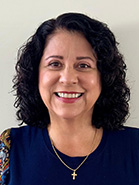
Martha Bloyer, PT, DPT
Martha Bloyer, PT, DPT, Assistant Professor, Department of Physical Therapy
Project Title: Listening to Young Voices: Refining Obesity Prevention Strategies for South Florida’s Preschoolers
Dr. Bloyer’s project will gather feedback from preschoolers to improve Healthy Caregivers–Healthy Children (HC2), an evidence-based curriculum designed to promote healthy eating and physical activity in childcare centers.
Working alongside Le Jardin Community Centers and trusted bilingual cultural brokers from Hispanic and Haitian communities, her study will utilize collaborative partnerships to ensure meaningful community engagement in the adaptation and implementation of obesity prevention strategies, ultimately supporting healthier outcomes for children.
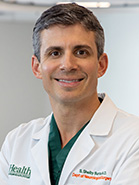
Stephen Shelby Burks, M.D.
Stephen Shelby Burks, M.D., Assistant Professor, Department of Neurological Surgery
Project Title: Investigation of Inflammatory Cerebrospinal Fluid and Serum Biomarkers Following Spinal Cord Injury to Associate Long-Term Outcomes
Spinal cord injury can have lasting effects on movement, sensation, and other organ systems, while current treatment options often offer limited long-term improvement.
Dr. Burks’ project will study cerebrospinal fluid and blood serum biomarkers from patients with acute cervical spinal cord injuries and compare them with non-injury controls. The study will explore how the body’s response to injury may relate to injury severity, later complications, and long-term outcomes.
Importantly, the project uses fluid samples that are already collected as part of routine care, avoiding the need for additional invasive procedures. This reduces the burden on participants and families, helping overcome common barriers to recruitment, consent, and data collection.
The results could support new predictive models, diagnostic tools, and targeted preventive treatments that improve care for people living with spinal cord injuries.
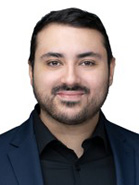
Filipe Fernandes Conti, Ph.D.
Filipe Fernandes Conti, Ph.D., Assistant Professor, Department of Surgery/Vascular
Project Title: Unraveling the Role of Lysyl Oxidase in Arteriovenous Fistula Dysfunction
Dr. Conti’s project focuses on an ongoing challenge for people with advanced kidney disease whom receive dialysis through arteriovenous fistulas (AVFs). It is known that about 40% of fistulas fail, often because the veins become too narrow.
Using advanced research methods and laboratory tools, Dr. Conti will investigate an enzyme called lysyl oxidase (LOX) to better understand its role in fistula failure. The findings could lead to new ways to help fistulas last longer, reduce the need for repeat procedures, lower health care costs, and improve quality of life for people who rely on dialysis.
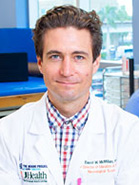
David McMillan, Ph.D.
David McMillan, Ph.D., Assistant Professor, Department of Neurological Surgery
Project Title: A Chatbot to Enhance Known Deficits in Hurricane Resource Communication Amongst Floridians Living with Paralysis
Hurricanes create serious risks for people living with spinal cord injury and paralysis, and prior work by Dr. McMillan’s team found that many community members are aware of available hurricane resources but do not use them.
His project will develop and test an evidence-informed chatbot tailored to the needs of Floridians living with paralysis. Built with input from patients, caregivers, emergency management professionals, communications experts, and medical partners, the chatbot will provide guidance and answer questions about hurricane preparedness that reflect users’ needs and preferences.
Aligned with the principles of translational science emphasizing boundary-crossing partnerships, this project uses established community relationships to turn research findings into a practical tool that helps people with spinal cord injuries. The approach may also provide a roadmap for developing more effective emergency communication strategies for other vulnerable populations.
To learn more about the CTSI Pilot Program Awards, visit our website.
RECENT POSTS
POPULAR TAGS
NEWSLETTER SIGNUP
If you would like to receive emails about the latest Miami CTSI events, funding opportunities, services and news, sign up to be on our mailing list.